
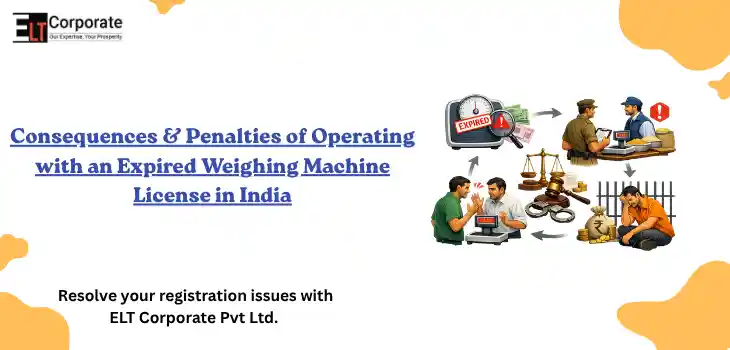
Running a business that uses weighing and measuring instruments without a valid license is not just a minor compliance issue—it is a serious legal violation under the Legal Metrology framework in India.
Many businesses ignore license renewals for weighing machines (such as platform scales, weighbridges, and retail scales), assuming it is a small procedural lapse. In reality, this can lead to heavy penalties, seizure of equipment, and even prosecution.
If your weighing machine license has expired—or is about to—this guide explains the consequences and how to avoid them.
What is a Weighing Machine License?
Under the Legal Metrology Act, 2009, any business involved in:
- Manufacturing
- Repairing
- Selling
- Using weighing and measuring instruments
must obtain a valid license from the Legal Metrology Department.
Additionally, all weighing instruments must be:
- Verified and stamped
- Calibrated periodically
- Used only for approved purposes
What Happens When Your License Expires?
Once your license expires:
- Your weighing machine becomes legally invalid
- You are considered non-compliant
- Any transaction carried out using that machine may be treated as illegal
Even if the machine is technically accurate, legal validity is mandatory.
Major Consequences of Operating with an Expired License
1. Monetary Penalties
Operating with an expired license can attract fines under Legal Metrology laws.
- First offense: Monetary penalty
- Repeated offense: Higher fines and stricter action
Penalties may range from ₹2,000 to ₹50,000 or more depending on the nature of the violation.
2. Seizure of Weighing Equipment
Authorities have the power to:
- Inspect your premises
- Seize non-compliant weighing machines
- Seal equipment until compliance is restored
This can immediately halt business operations.
3. Business Disruption
If weighing equipment is seized:
- Retail billing may stop
- Manufacturing processes may be delayed
- Logistics and dispatch operations may be affected
This leads to direct revenue loss and operational downtime.
4. Legal Action and Prosecution
Repeated violations or intentional non-compliance may result in:
- Court proceedings
- Criminal liability in serious cases
- Damage to business reputation
This is particularly critical for manufacturers, importers, and large-scale businesses.
5. Loss of Customer Trust
Using an unverified or expired weighing machine can:
- Create doubt about measurement accuracy
- Lead to customer complaints
- Affect brand credibility
In sectors such as retail, pharmaceuticals, and manufacturing, trust is essential.
6. Impact on Other Compliance Requirements
Non-compliance under Legal Metrology may affect:
- BIS certification
- Import and export approvals
- Factory inspections
- Government tenders
A single lapse can lead to multiple compliance issues.
Applicable Legal Provisions
Under the Legal Metrology Act, 2009 and related rules:
- Use of unverified or unstamped equipment is punishable
- Operating without a valid license is an offense
- Tampering or misuse attracts stricter penalties
Authorities frequently conduct inspections in:
- Retail outlets
- Warehouses
- Manufacturing units
- Fuel stations
How to Avoid These Penalties
1. Track License Expiry Dates
Maintain a compliance calendar for:
- License renewals
- Verification stamping
- Calibration schedules
2. Renew License Before Expiry
Apply for renewal at least 30–60 days before the expiry date.
3. Ensure Regular Verification
Make sure all machines are:
- Verified by Legal Metrology authorities
- Properly stamped with validity
4. Maintain Proper Documentation
Keep the following records readily available:
- License copy
- Verification certificates
- Calibration reports
5. Seek Professional Compliance Support
Managing Legal Metrology compliance can be complex, especially for:
- Multi-location businesses
- Manufacturers
- Importers
Professional support helps ensure complete compliance and avoids penalties.
Practical Example
A retail chain operating across multiple cities failed to renew weighing machine licenses in several outlets.
As a result:
- Machines were seized during inspection
- A penalty exceeding ₹25,000 was imposed
- Operations were halted for two days
The financial loss far exceeded the cost of timely renewal.
Why Businesses Delay Renewal
Common reasons include:
- Lack of awareness
- Absence of a tracking system
- Underestimating compliance importance
- Reliance on manual processes
However, authorities treat such lapses as serious violations.
Conclusion
Operating with an expired weighing machine license carries significant legal and operational risks.
The consequences extend beyond penalties to include business disruption, reputational damage, and potential legal action.
Maintaining compliance is not optional—it is essential for smooth business operations.
What is the penalty for using an expired weighing machine license?
Penalties can range from ₹2,000 to ₹50,000 or more, depending on the nature and frequency of the violation.
Can authorities seize weighing machines?
Yes, non-compliant machines can be seized or sealed during inspections.
How often should weighing machines be verified?
Typically on an annual basis, subject to state-specific rules.