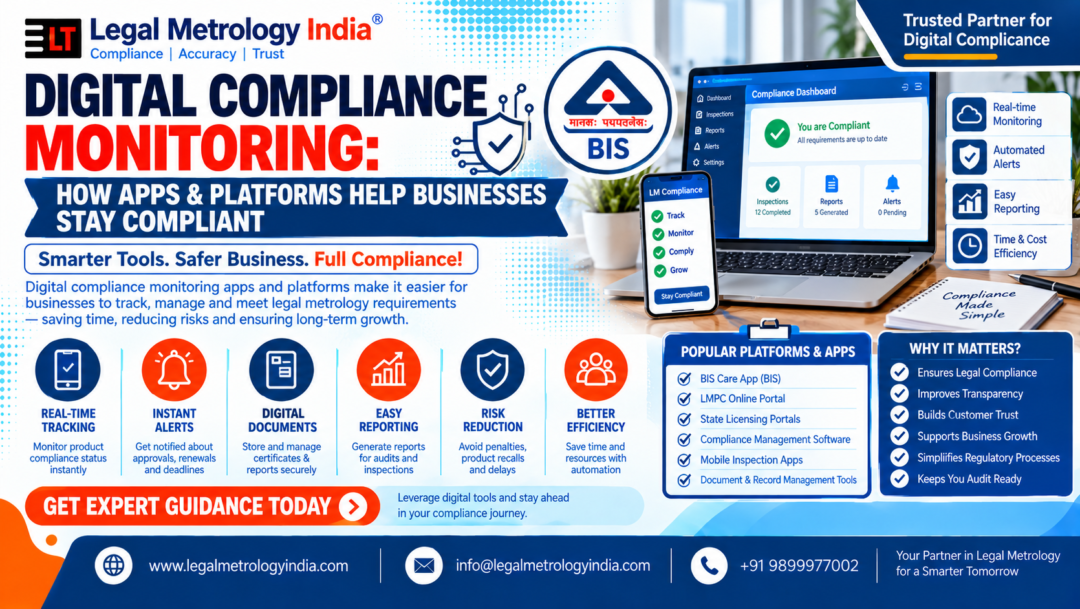
Running a business means more than serving customers and increasing sales. Paper files and scattered emails can make it easy to miss a document or deadline.
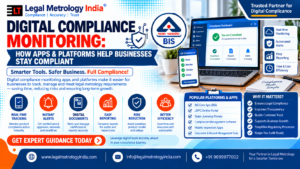
Digital compliance monitoring helps businesses organize responsibilities using apps and online platforms. These tools can store records, send reminders, assign tasks, and show what needs attention. They support professional judgment rather than replace it.
The Legal Metrology website covers related requirements. This topic matters to businesses handling packaged goods. Visit Legal Metrology.
Need Help with Legal Metrology Compliance?
Get Expert Guidance for LMPC Certificates, Licences & Registrations. Contact Our Team Today to Discuss Your Business Requirements!
What Is Digital Compliance Monitoring?
Digital Compliance Monitoring means using digital tools to track regulatory responsibilities, internal procedures, records, and deadlines. These tools can include shared calendars, spreadsheets, cloud folders, task management apps, dashboards, and specialist compliance platforms.
An importer may need supplier details, product labels, invoices, registration documents, and application updates. A digital system keeps these records together and shows which actions are complete or pending.
Useful compliance tracking software helps teams create repeatable processes. However, businesses must still check current rules and keep entered information accurate.
Why Is Digital Monitoring Important for Businesses?
When departments keep separate records, employees may not know which document is current or who owns the next step. Manual tracking also makes repeated mistakes harder to spot.
Digital Compliance Monitoring gives teams a shared view of tasks, responsibilities, and missing information, reducing confusion across spreadsheets and emails.
Key benefits include:
- Keeping important documents organized and accessible.
- Receiving reminders for planned reviews and deadlines.
- Tracking applications and outstanding requests.
- Giving employees clear responsibilities.
- Reducing repeated searches and manual follow-ups.
- Preparing more efficiently for internal checks.
Choose tools that fit existing workflows for Digital Compliance Monitoring. Start with the hardest tasks to manage and improve the process gradually.
Digital compliance monitoring can also make handovers easier when an employee leaves or changes roles. If records and task notes are stored properly, another team member can understand the current position without starting from scratch. This continuity is especially useful during busy periods.
Keep Documents in One Secure Place
Documents such as certificates, invoices, product specifications, labels, and application records often sit in different folders. Employees may waste time searching or use outdated files.
A document management system organizes records by product, supplier, department, or registration type. File names and version history help employees find the right document. An importer can keep supplier information, packaging details, invoices, and approvals together for each product line, making pre-submission reviews easier.
Digital Compliance Monitoring works better with backups, access permissions, and clear document-update rules. Restrict sensitive files to authorized people and archive old versions.
A written document policy makes the technology more effective. Decide who uploads new files, who checks accuracy, and who approves final versions. These simple rules help prevent duplicate documents and make the system easier for new employees to follow.
Set Reminders for Important Dates
Busy employees can miss deadlines. Digital calendars and task apps can remind teams about document reviews, inspections, renewal checks, and other dates.
A reminder several weeks in advance gives the responsible employee time to confirm requirements and collect documents. With digital compliance monitoring, teams can act before tasks become urgent. Assign reminders to named employees and use a shared calendar to balance workloads.
Verify every date: validity periods and obligations vary. A reminder is not a substitute for checking official requirements.
Businesses can also review reminder reports each month to see which tasks were completed late and why. If deadlines are repeatedly missed, managers can adjust workloads, set earlier alerts, or clarify who is responsible for completing the task.
Review Product Labels and Declarations
Businesses selling pre-packaged commodities must check required declarations. Depending on the rules, labels may include the manufacturer, packer or importer, product name, quantity, retail sale price, and consumer contact details.
Digital checklists can record label details, compare versions, and document reviews. An approval workflow helps prevent printing before required checks are complete.
This supports Legal Metrology compliance by flagging missing information before printing or distribution and recording the version reviewed. Confirm which declarations apply to each product and review rule changes. Digital records support decisions but do not replace them.
Keep a record of label approvals and the reasons for changes. When a product is updated, the team can compare the new design with the approved version and send it for review again. This creates a clear history for future checks.
Track Applications and Approvals
Businesses may manage several applications at once, each at a different stage. Without a tracker, updates can be missed and work repeated.
A dashboard can show statuses such as “Documents Pending,” “Under Review,” and “Action Required,” alongside dates, owners, and next steps.
This regulatory compliance management approach reduces follow-ups and lets authorized colleagues continue work when someone is away.
Legal Metrology readers can start with a simple tracker, updating it whenever a status changes and saving related correspondence.
The tracker should include the application reference, submission date, current status, pending documents, and next follow-up date. Avoid recording unnecessary personal information. Review access regularly so only the relevant employees can view or edit the tracker.
Give Employees Clear Responsibilities
Compliance often involves procurement, marketing, and compliance teams. If nobody owns the next step, work can stall while employees assume someone else is responsible. Task apps let managers assign work, set due dates, attach files, and monitor progress. Digital compliance monitoring helps reduce repeated follow-up messages.
One employee can collect product details, another check documents, and a manager review the checklist. Every task needs an owner, deadline, and clear outcome. Digital Compliance Monitoring works best when responsibilities are clear. Teams still need to communicate when requirements are unclear or tasks depend on others.
A short weekly meeting can help teams review overdue tasks and resolve blockers. Keep the meeting focused on decisions: what is pending, who will handle it, and when the next update is due. The digital system then becomes a shared source of truth.
Identify Risks and Repeated Mistakes
Reports can reveal repeated problems, such as applications delayed by missing documents or labels that often need corrections.
These insights help managers improve procedures, train employees, and prioritize overdue tasks or incomplete records with Digital Compliance Monitoring.
Using compliance risk management alongside digital compliance monitoring helps teams prioritize work and create checklists to prevent repeated delays.
Reports generated through Digital Compliance Monitoring depend on accurate data. Check records regularly and ask knowledgeable staff to review risks and decide what action is appropriate.
For example, if the same document is missing from several applications, the business could update its checklist and train staff to collect it earlier. Small process improvements can prevent repeated delays and make future applications easier to prepare.
Need Help with Legal Metrology Compliance?
Get Expert Guidance for LMPC Certificates, Licences & Registrations. Contact Our Team Today to Discuss Your Business Requirements!
Protect Records and Business Information
Digital documents must be protected. Choose platforms with access controls, secure authentication, backups, and change tracking. Employees should know where approved files are stored and avoid sharing confidential information. Remove access when staff no longer need it.
A reliable digital compliance system includes checks for accuracy, access, and protection. Teams can use Digital Compliance Monitoring to review these basics. Keep records for required periods and test backups using Digital Compliance Monitoring.
Technology cannot guarantee security; staff training, sensible permissions, and regular reviews matter too.
How Legal Metrology Can Help Businesses
Technology organizes work, but businesses must still understand the requirements that apply to their products and activities. A reminder cannot guarantee compliance.
Legal metrology is relevant to businesses reviewing measurement-related and packaged commodity requirements. Identify applicable rules and keep supporting records.
List the products handled, identify potentially applicable registrations or declarations, and assign someone to review each requirement. Then track actions digitally. Combining reliable guidance with digital compliance monitoring clarifies responsibilities. Seek qualified advice when rules are unclear.
Conclusion
Digital compliance monitoring tools can help businesses organize documents, monitor deadlines, track applications, assign tasks, and identify recurring problems.
Digital compliance monitoring makes responsibilities more visible and routine work more consistent. Accurate records and regular reviews can reduce avoidable administrative errors. Digital tools should support, not replace, legal checks. Choose suitable systems, protect records, and make sure employees understand their roles.
Legal Metrology Contact now offers a starting point for exploring relevant compliance topics. Review your process, identify gaps, and improve organization.
Need Help with Legal Metrology Compliance?
Get Expert Guidance for LMPC Certificates, Licences & Registrations. Contact Our Team Today to Discuss Your Business Requirements!
Frequently Asked Questions
Q1. What is digital compliance monitoring?
It is the use of digital tools to track compliance tasks, manage documents, monitor deadlines, and organize records.
Q2. Can small businesses use digital compliance tools?
Yes. Shared calendars, spreadsheets, and secure document storage can help small businesses get started without a large investment.
Q3. Does compliance software guarantee legal compliance?
No. Software supports organization, but businesses must verify applicable regulations and maintain accurate information.
Q4. How can digital tools support legal metrology compliance?
They can help organize label information, store relevant records, track tasks, and remind teams to review requirements.
Q5. How often should a business review its compliance records?
The schedule depends on the business and its obligations. Regular reviews, plus checks when rules or business activities change, help keep records current.