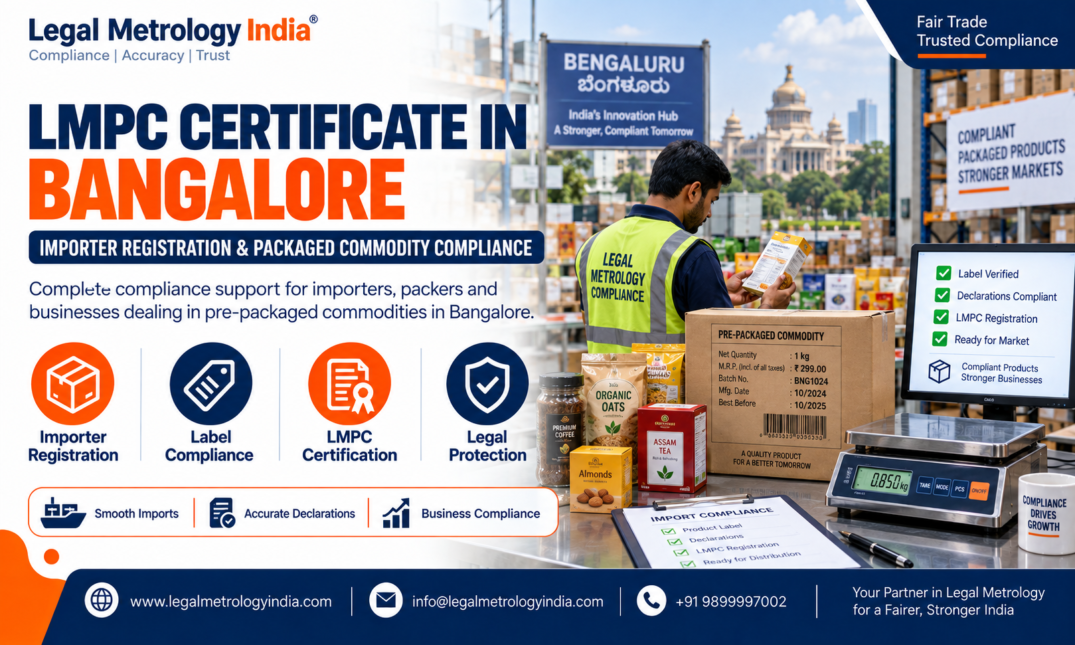

The Indian e-commerce industry is evolving rapidly, with hundreds of products being sold online daily through Amazon, Flipkart and independent websites but alongside this growth comes stringent regulatory responsibilities. One of the maximum important legal guidelines affecting line vendors, importers, manufacturers and marketplaces is the Legal Metrology Framework in India
Many e-commerce companies inadvertently violate legal metrology rules because of misleading labeling, lack of declaration, or wrong packaging facts. These mistakes can lead to fines, product delisting, confiscation of goods, or bring criminal information to authorities.
In this blog, we will take on the importance of complying with legal metrology in e-business, the principal demanding situations that groups face, and realistic solutions to stay in compliance.
What is Legal Metrology?
Legal metrology refers to laws and regulations relating to the weight, measurement, labeling and packaging of goods. It is ruled far below in India:
- Legal Metrology Act,
- Legal Metrology (Packaged Goods) Rules,
The goal of those legal guidelines is to protect buyers from deceptive data and unfair business practices.
These policies apply to:
- The manufacturers
- Importers
- Packers
- e-business merchants
- Online Marketplace
- Vendors and vendors
Why Legal Metrology Compliance is Important for E-Commerce
When consumers buy products on-line, they are completely dependent on the data displayed on the website or on the product packaging. Inaccurate or fraudulent declarations may result in proceedings and regulatory action by the purchaser.
Compliance with legal metrology ensures that:
- Transparency in on line product listings
- Correct amount and size declarations
- Consumer trust and confidence
- Smooth customs clearance for imported goods
- avoidance of consequences and confiscation of product
Today, it is actively monitoring line structures for compliance violations.
Applicability of Legal Metrology in E-Commerce
Under Indian law, e-commerce entities must display mandatory declarations on:
- Product packaging
- Product labels
- Online product listings
The rules apply to:
- Domestic products
- Imported products
- Pre-packaged commodities sold online
Even if the product is sold through third-party marketplaces, compliance responsibility may still lie with the importer, manufacturer, or seller.
Mandatory Declarations Required Under Legal Metrology
The following declarations are generally required on packaged products:
| Mandatory Declaration | Requirement |
| Name and address | Manufacturer, importer, or packer details |
| Net quantity | Weight, volume, length, or number |
| MRP | Maximum Retail Price inclusive of taxes |
| Date details | Manufacturing/import/packing date |
| Customer care details | Contact information for complaints |
| Country of origin | Mandatory for imported goods |
| Commodity details | Product name and description |
Common Legal Metrology Challenges in E-Commerce
1. Incorrect product labeling
One of the biggest issues in e-commerce is incorrect or incomplete labeling.
Common errors are:
- Missing importer details
- Incorrect MRP rendering
- Incorrect unit measurement
- Custodial care information missing
- Unknown fontlength
Even small labeling errors can cause compliance problems.
2. Non-Compliant Online Listings
Many sellers focus only on physical packaging and ignore online listing requirements.
However, Indian regulations require mandatory declarations to also appear on the e-commerce platform before purchase.
Missing details in product listings can attract notices from authorities.
3. Imported Product Compliance Issues
Imported products face additional scrutiny under Legal Metrology.
Challenges include:
- Re-labeling imported goods
- Affixing importer details
- Customs clearance delays
- Incorrect country-of-origin declarations
- Non-compliant foreign packaging
Without proper LMPC compliance, shipments may get stuck at customs.
4. Multiple Vendor Management
Marketplaces often onboard thousands of sellers. Ensuring every vendor follows Legal Metrology rules becomes difficult.
This creates risks such as:
- Sale of non-compliant products
- Consumer disputes
- Platform liability concerns
- Regulatory investigations
5. Frequent Regulatory Updates
Compliance rules and enforcement practices keep evolving.
Businesses struggle with:
- Understanding changing regulations
- Updating packaging designs
- Maintaining documentation
- Training teams regularly
Compliance with legal metrology for importers
Importers selling goods on line will generally receive:
- LMPC Registration (Legal Metrology Packaged Goods Registration) 1.1.
- Proper import labeling compliance
- Updates the announcement before the sale
LMPC registration is important primarily for importers who deal with:
- Electronics
- Cosmetics
- medical equipment
- consumer goods
- Food-related packaged gadgets
Failure to conform can also lead to customs detention and consequences.
Penalties for Non-Compliance
Non-compliance with Legal Metrology laws may result in:
- Monetary penalties
- Product seizure
- Suspension of sales
- Customs hold
- Legal notices
- Consumer complaints
- Marketplace listing removal
Repeated violations may significantly damage brand reputation.
Solutions for Legal Metrology Compliance in E-Commerce
1. Conduct Proper Compliance Audit
Businesses should regularly audit:
- Product labels
- Packaging declarations
- Online listings
- Vendor documents
- Import documents
A professional compliance audit helps identify gaps before authorities do.
2. Ensure Correct Label Designing
Packaging should be designed according to Indian Legal Metrology requirements.
Key practices include:
- Proper font size
- Accurate measurements
- Clear MRP display
- Standardized declarations
- Correct importer/manufacturer details
3. Maintain Proper Documentation
Businesses should maintain:
- LMPC certificates
- Import records
- Packaging approvals
- Vendor agreements
- Product compliance records
Proper documentation helps during inspections and customs clearance.
4. Update Online Product Listings
Every e-commerce product page should clearly display:
- MRP
- Net quantity
- Manufacturer/importer details
- Country of origin
- Customer care details
This is one of the most overlooked compliance areas.
5. Vendor Compliance Monitoring
E-commerce marketplaces should establish:
- Vendor onboarding checks
- Compliance verification systems
- Regular audits
- Product approval workflows
This reduces compliance risk significantly.
6. Seek Professional Compliance Assistance
Legal Metrology laws can become complex, especially for importers and large e-commerce businesses.
Professional consultants help with:
- LMPC Registration
- Packaging review
- Compliance audits
- Label approval
- Regulatory guidance
- Import clearance support
Future of Legal Metrology in E-Commerce
As online shopping continues to grow, regulatory enforcement will become stricter.
Authorities are increasingly focusing on:
- Consumer protection
- Accurate online disclosures
- Imported product monitoring
- Digital marketplace accountability
Businesses that proactively adopt compliance systems will gain long-term trust and operational stability.
Conclusion
Legal Metrology Compliance is no longer optional for e-commerce businesses in India. Whether you are an importer, manufacturer, seller, or online marketplace, proper compliance is essential to avoid penalties and maintain smooth business operations.
From correct labeling and online declarations to LMPC registration and import compliance, businesses must ensure every product sold online meets Indian Legal Metrology requirements.
A proactive compliance strategy not only protects businesses legally but also builds consumer trust and strengthens brand credibility in the competitive e-commerce market.
Is LMPC registration mandatory for imported products sold online?
Yes, in many cases imported pre-packaged commodities require LMPC registration before sale in India.
Are online marketplaces also responsible for compliance?
Yes, marketplaces may also face scrutiny if non-compliant products are sold on their platforms.
What happens if product labels are incorrect?
Incorrect labels may result in penalties, customs detention, or product seizure.