Are you an e-commerce seller on platforms like Amazon, Flipkart, or Meesho, wondering how to navigate the complex world of Legal Metrology in India? Selling products online means more than just managing listings and shipping; it also involves adhering to specific legal requirements. Understanding these rules is crucial to protect your business and build consumer trust.
This guide provides a clear, actionable checklist to help manufacturers, importers, and packers comply with Legal Metrology for e-commerce sellers. We will break down the essential regulations and offer practical strategies to ensure your online business runs smoothly and without legal hiccups.
Why Legal Metrology Matters for Your Online Store?
Complying with Legal Metrology laws offers significant benefits for your e-commerce venture. First, it ensures consumer protection by guaranteeing accurate weights, measures, and declared prices. This transparency builds trust and enhances your brand’s reputation. Happy customers are repeat customers. Secondly, adherence prevents hefty fines, product seizures, and legal troubles.
Staying compliant safeguards your business from operational interruptions and financial penalties. It fosters fair trade practices and creates a level playing field for all online sellers. Ultimately, it means long-term stability and growth for your e commerce business.
Required Documents for Legal Metrology Registration
When seeking Legal Metrology registration, whether as a packer or importer, you will need a set of documents. Having these ready in advance can significantly speed up the process. Always ensure your documents are current and valid. Here are the common prerequisites:
1. Proof of Identity (e.g., PAN Card, Aadhar Card of
2. Proprietor/Partners/Directors) Proof of Address (e.g., Utility Bill, Rent Agreement, Sale Deed)
3. Business Registration Proof (e.g., GST Registration Certificate, Company Incorporation Certificate)
4. Partnership Deed or Memorandum of Association (MOA) and Articles of Association (AOA) (if applicable)
5. Site Plan/Factory Layout (if applicable for manufacturing/packaging units) 6. No Objection Certificate (NOC) from the pollution control board (if applicable) Brand Name/Trademark Certificate (if registered)
7. Product Details (list of commodities to be packed/imported)
8. Specimen of the label for packaged commodities
Validity of Legal Metrology Registrations
Legal Metrology registrations, such as those for packers or importers, are not a one-time process. They generally come with a specific validity period. Typically, these licenses are valid for a period of one to five years. It is essential to keep track of your registration’s expiry date.
Renewing your registration before it expires is critical to maintain continuous compliance. Ignoring renewal can lead to your registration becoming invalid, potentially resulting in penalties and operational hurdles. Plan ahead to avoid any disruptions to your e commerce operations.
Your Step-by-Step Compliance Procedure
Navigating Legal Metrology compliance procedure for your e-commerce business involves several key steps. This procedure focuses on ensuring your packaged products meet the mandatory declaration requirements and that your business holds the necessary registrations.
1. Understand Your Role: First, determine if you are a manufacturer, packer, or importer. Each role has specific responsibilities under the Legal Metrology (Packaged Commodities) Rules, 2011 (LMPCR).
2. Mandatory Declarations: Ensure all your packaged products clearly display essential information. This includes the name and address of the manufacturer/packer/importer, common name of the commodity, net quantity, date of manufacture/packing/import, Maximum Retail Price (MRP), and consumer care details.
3. E-commerce Listing Compliance: Replicate these mandatory declarations on your product listings on Amazon, Flipkart, or Meesho. Important details like MRP, net quantity, and country of origin should be visible in product images and descriptions. Consistency between physical and digital labels is crucial.
4. Packer Registration: If you pack or re-pack any product for sale, even if manufactured by someone else, you need a Packer Registration. Apply to the Director of Legal Metrology or the Controller of Legal Metrology in your state.
5. Importer Registration: If you import pre-packaged goods for sale, you need to register as an Importer under Legal Metrology. This process is typically handled by the Central Legal Metrology Department.
6. Maintain Records: Keep detailed records of your compliance efforts, including registration certificates, product labels, and internal audit reports. These records can be vital during inspections or inquiries.
Common Mistakes to Avoid
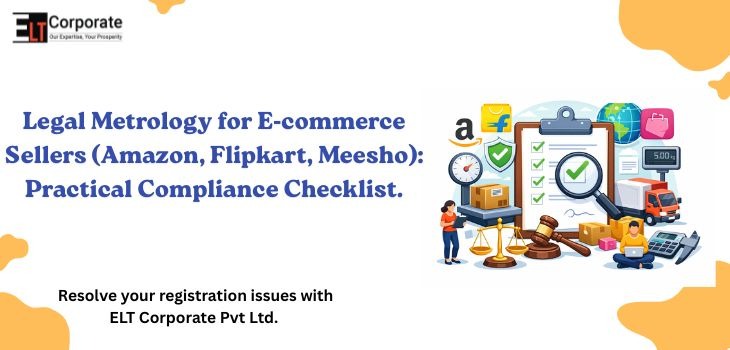
Many e-commerce sellers, even those with good intentions, can stumble over common Legal Metrology pitfalls. Being aware of these can save you a lot of trouble and expense. Here is a practical checklist to help you stay clear of common errors.
- Incorrect MRP: Is your Maximum Retail Price (MRP) clearly declared and accurate?
- Outdated Registrations: Are your Packer or Importer registrations valid and renewed on time?
- Inconsistent Labeling: Do your physical product labels match the information provided in your online listings?
- Ignoring Imported Product Rules: For imported goods, have you declared the country of origin and included importer details?
- Small Font Size: Is the mandatory information on your packaging easily readable by consumers?
- Assuming Manufacturer Handles All: As a packer or seller, are you aware of your own responsibilities, even if a manufacturer is involved?
- Missing Declarations: Have you included all mandatory information like net quantity, manufacturing date, and consumer care details?
What Happens If You Ignore Legal Metrology?
Ignoring Legal Metrology compliance for your e-commerce products can lead to severe consequences. These are not just minor inconveniences; they can significantly impact your business’s financial health and reputation. Non-compliance can result in monetary fines, which increase for repeat offenses. Beyond fines, authorities can order product seizures or forfeiture, leading to inventory losses.
In serious cases, a business could face suspension or even closure. Your seller accounts on platforms like Amazon, Flipkart, or Meesho might be suspended or delisted, cutting off your sales channels. Furthermore, negative consumer reviews and a damaged brand reputation can be lasting.
The Cost Involved
The costs associated with Legal Metrology compliance vary based on your business type, the number of products, and the state you operate in. These costs generally cover government application fees and, if you opt for professional assistance, service charges. Here’s a rough breakdown:
| Category | Approximate Cost Range (INR) | Details |
| Government Fees (Application/Registration) | ₹500 – ₹5,000 | Official fees for Packer/Importer Registration, verification of weights/measures. Varies by state and specific application. |
| Professional Consultation/Service Charges | ₹5,000 – ₹25,000+ | Fees for expert assistance in documentation, application filing, compliance auditing, and advisory services. Depends on complexity. |
| Labeling & Packaging Design (Compliance Review) | ₹2,000 – ₹10,000+ | Costs for reviewing or redesigning product labels to ensure they meet all mandatory declaration requirements. |
Please note these figures are estimated ranges and can fluctuate based on specific requirements, state regulations, and the service provider chosen.
How ELT Corporate Pvt. Ltd. Can Help You?
Navigating the complexities of Legal Metrology while managing an e-commerce business can be overwhelming. This is where ELT Corporate Pvt. Ltd. steps in. We offer comprehensive Legal Metrology compliance services tailored for online sellers, manufacturers, importers, and packers.
Our team of experts understands the nuances of the Legal Metrology (Packaged Commodities) Rules, 2011. We assist you with everything from initial registration to ensuring your product labels and e-commerce listings are perfectly compliant.
With ELT Corporate Pvt. Ltd., you get end-to-end support, helping you avoid penalties, streamline your operations, and focus on growing your business with peace of mind. Let us handle the legalities so you can thrive online.
Conclusion
Legal Metrology compliance is not merely a legal obligation for e-commerce sellers; it’s a foundation for trust, safety, and sustainable business growth. By understanding and diligently following the rules, especially regarding mandatory declarations and registrations, you protect your brand and empower your customers.
Take the proactive step to review your current practices and ensure full compliance. This practical checklist should be your go-to resource. For expert guidance and seamless execution, consider partnering with professionals who can navigate these legal waters for you. Secure your e-commerce future by prioritizing compliance today.
FAQs
Q1: As an Amazon/Flipkart seller, do I truly need Legal Metrology registration, even if I’m just packaging products made by someone else?
Yes, if you package or re-package any product, even if manufactured by another entity, you are considered a ‘packer.’ The Legal Metrology (Packaged Commodities) Rules, 2011, mandate a Packer Registration for such activities, regardless of whether you are the original manufacturer.
Q2: What specific information must be on my product labels and also on my e-commerce listing to avoid fines and product delisting?
Your labels and listings must include the common product name, net quantity, manufacturer/packer/importer details, manufacturing/packing date, MRP, and consumer care information. For imported goods, the country of origin is also mandatory. Inconsistency can lead to penalties or platform action.
Q3: I import products and sell them online. What extra Legal Metrology steps do I need to take compared to a domestic manufacturer, and how do I complete them quickly?
Importers must register as an Importer under Legal Metrology, often with the Central Government. Additionally, ensure all imported pre-packaged commodities display ‘country of origin’ and your importer details. Promptly gather all required documents like IEC code and foreign supplier invoices to expedite the process.
Q4: How can I ensure my product listings on Amazon, Flipkart, and Meesho are always compliant, especially with changing regulations and large inventories?
Regularly audit your product listings against the latest Legal Metrology rules. Implement a robust internal checklist for new product uploads and updates. Consider using compliance management tools or seeking expert consultation to help monitor regulations and manage large inventories effectively.
Q5: What are the biggest mistakes e-commerce sellers make regarding Legal Metrology, and how can I avoid them to protect my business from severe penalties?
Common mistakes include incorrect MRPs, missing mandatory declarations, or letting registrations expire. Avoid these by conducting regular label audits, ensuring all required information is present and readable, and setting reminders for registration renewals. Ignorance of rules is not a defense against penalties.