
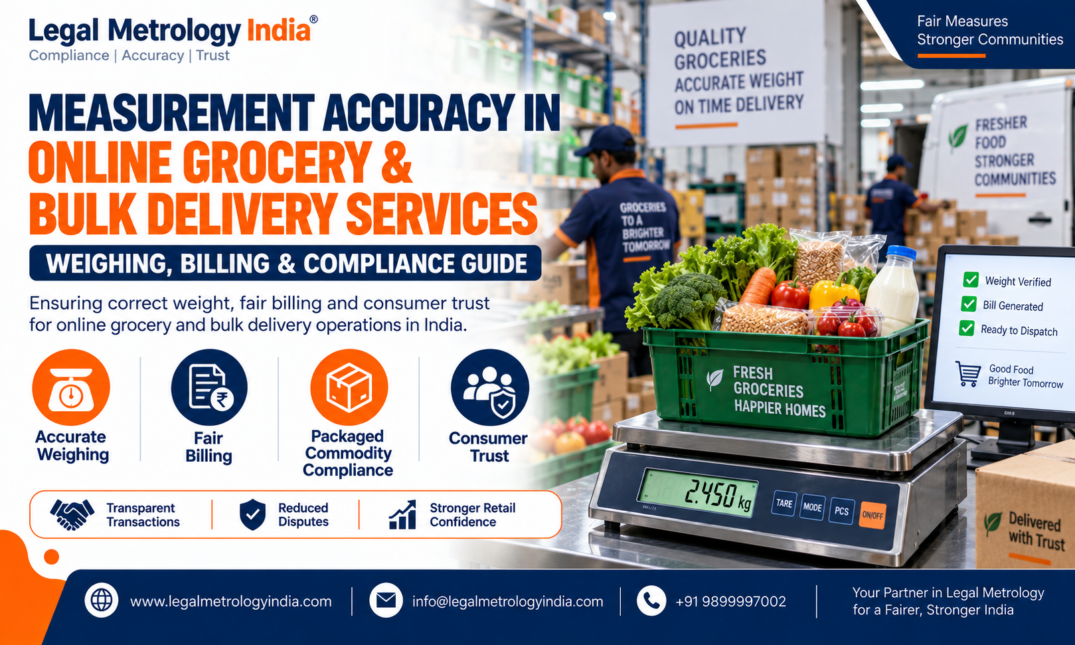
The rapid growth of online grocery platforms and bulk delivery services has transformed the way consumers purchase daily essentials. From vegetables and fruits to grains, pulses, packaged foods, and household supplies, millions of products are delivered through digital platforms every day.
In online grocery operations, accurate measurement plays a critical role because many products are sold based on weight, volume, or quantity. Customers expect that the quantity received matches the quantity displayed and paid for during online ordering.
Measurement accuracy in online grocery delivery is therefore essential to maintain transparency, consumer trust, and compliance with legal metrology regulations in India.
Online grocery businesses, warehouses, dark stores, fulfillment centers, and bulk suppliers must ensure that weighing instruments used for commercial transactions are accurate, verified, and compliant with applicable legal metrology requirements.
What is Measurement Accuracy in Online Grocery Delivery?
Measurement accuracy in online grocery delivery refers to the ability of weighing instruments and measurement systems used by grocery businesses to provide correct and reliable measurements while preparing customer orders.
In online grocery operations, weighing may happen at different stages:
- Warehouse receiving
- Inventory management
- Order picking
- Packaging
- Final dispatch
- Delivery confirmation
Examples include:
- Measuring 5 kg rice packets
- Weighing fresh fruits and vegetables
- Measuring bulk grocery orders
- Preparing customized quantity orders
Accurate measurement ensures that customers receive the exact quantity they have paid for.
Why Measurement Accuracy Is Important in Online Grocery Services
Online grocery businesses handle thousands of weight-based Measurement accuracy in online grocery delivery products daily. Even minor measurement errors can affect customer satisfaction and business operations.
1. Customer Trust and Transparency
Customers rely on online platforms for accurate product quantities. Incorrect weights can lead to complaints, refunds, and loss of customer confidence.
Maintaining Measurement Accuracy in Online Grocery Delivery helps businesses build transparent relationships with consumers.
2. Fair Pricing Practices
Many grocery products are priced according to weight, such as
- Fruits
- Vegetables
- Dry fruits
- Spices
- Grains
- Bulk commodities
Accurate weighing ensures customers pay only for the actual quantity supplied.
3. Legal Compliance
Under measurement accuracy in online grocery delivery laws, weighing instruments used for commercial transactions must meet prescribed accuracy standards.
Online grocery companies must ensure their weighing equipment is properly:
- Approved
- Verified
- Stamped
- Maintained
Role of Legal Metrology in Online Grocery Delivery
Legal metrology regulates weights and measures used in commercial activities to ensure accuracy and prevent unfair trade practices.
For online grocery businesses, legal metrology requirements apply to:
- Electronic weighing scales
- Digital weighing machines
- Platform scales
- Retail weighing machines
- Warehouse weighing systems
The objective is to ensure that every measurement made during commercial transactions is accurate and reliable.
Legal Metrology Requirements for Online Grocery Businesses
1. Use of Approved Weighing Instruments
Online grocery companies must use weighing machines suitable for commercial purposes.
The weighing instrument should comply with applicable legal metrology standards and technical requirements.
Using domestic weighing machines for commercial transactions may result in compliance issues.
2. Verification and Stamping of Weighing Machines
One of the key requirements for measurement accuracy in online grocery delivery is periodic verification of weighing instruments.
The Legal Metrology Department verifies:
- Accuracy of the weighing machine
- Proper functioning
- Compliance with standards
After successful verification, the instrument receives the required stamping or verification certificate.
3. Regular Maintenance and Calibration
Weighing machines used continuously in warehouses and dark stores may experience wear and tear.
Businesses should maintain:
- Calibration records
- Repair history
- Verification certificates
- Maintenance schedules
Regular checks help prevent incorrect measurements.
Where Measurement Accuracy Matters in Online Grocery Operations
1. Warehouses and Fulfillment Centers
Large grocery warehouses receive and dispatch thousands of products daily.
Accurate weighing helps in:
- Stock management
- Supplier verification
- Order preparation
- Inventory control
2. Dark Stores
Quick-commerce businesses operate dark stores. Measurement accuracy in online grocery delivery, where orders are packed within minutes.
Weighing accuracy is important during:
- Product picking
- Quantity confirmation
- Order packing
3. Fresh Grocery Delivery
Fresh products such as fruits and vegetables are commonly sold by weight.
Accurate weighing ensures:
- Correct billing
- Fair pricing
- Customer satisfaction
4. Bulk Delivery Services
Bulk delivery companies supply restaurants, hotels, and businesses. Measurement accuracy in online grocery delivery requires maintaining accurate measurement systems.
Examples include:
- Rice suppliers
- Flour distributors
- Oil suppliers
- Wholesale grocery providers
Challenges Affecting Measurement Accuracy in Grocery Delivery
Online grocery businesses may face several challenges:
1. Incorrect Weighing Equipment
Using unsuitable or inaccurate weighing machines can result in incorrect measurements.
2. Lack of Periodic Verification
Expired verification certificates can create regulatory risks.
3. High Usage of Weighing Machines
Continuous usage in warehouses may affect machine performance over time.
4. Human Errors
Incorrect operation, improper placement of products, or failure to tare Measurement accuracy in online grocery delivery packaging weight can impact measurement accuracy.
Best Practices to Maintain Measurement Accuracy in Online Grocery Delivery
1. Maintain Verified Weighing Equipment
Businesses should ensure all weighing machines have valid legal metrology verification.
2. Conduct Regular Internal Checks
Periodic internal audits can identify:
- Measurement errors
- Equipment issues
- Documentation gaps
3. Train Employees
Staff should be trained on:
- Correct weighing procedures
- Machine handling
- Recording measurements
- Customer order accuracy
4. Maintain Compliance Records
Businesses should maintain:
- Purchase invoices
- Verification certificates
- Calibration reports
- Equipment details
5. Use Digital Monitoring Systems
Modern grocery businesses can integrate digital systems to monitor:
- Weight records
- Inventory movement
- Order accuracy
Technology helps improve operational efficiency and reduces errors.
Impact of Accurate Measurement on Customer Experience
In online grocery businesses, customer experience depends heavily on accuracy and reliability.
Proper Measurement Accuracy in Online Grocery Delivery helps businesses achieve:
- Fewer customer complaints
- Reduced product disputes
- Better reviews
- Higher customer retention
- Stronger brand reputation
Customers expect online grocery platforms to deliver exactly what they order, especially for weight-based products.
Penalties for Non-Compliance with Measurement Requirements
Failure to follow legal metrology requirements may lead to:
- Penalties
- Seizure of non-compliant weighing instruments
- Regulatory notices
- Legal action
Businesses involved in online grocery and bulk delivery should proactively manage compliance to avoid operational disruptions.
How ELT Can Help with Legal Metrology Compliance
Managing compliance requirements for online grocery businesses requires proper understanding of legal metrology regulations and documentation.
ELT provides end-to-end legal metrology consultancy services, including:
- Weighing machine compliance support
- Verification and stamping assistance
- Documentation preparation
- Legal metrology registration support
- Compliance audits
- Regulatory advisory
Our experts assist online grocery platforms, warehouses, retailers, and bulk suppliers in maintaining accurate measurement systems.
How Online Grocery Platforms Ensure Measurement Accuracy
Maintaining Measurement Accuracy in Online Grocery Delivery requires a systematic approach across the entire supply chain. Leading grocery platforms implement multiple quality control measures to ensure that every order reaches customers with the correct weight and quantity.
Key practices include:
1. Standardized Weighing Process
Online grocery businesses establish standard operating procedures (SOPs) for weighing products, including:
- Correct placement of products on weighing scales
- Removal of packaging weight (tare weight)
- Recording final product weight
- Verification before dispatch
A standardized process reduces human errors and improves order accuracy.
2. Automated Weighing Systems
Many large grocery warehouses use automated weighing systems integrated with inventory software.
These systems help in:
- Real-time weight recording
- Automated billing calculations
- Inventory accuracy
- Reducing manual mistakes
Automation plays an important role in improving measurement accuracy in online grocery delivery.
3. Quality Checks Before Dispatch
Before delivery, grocery companies may perform weight verification checks to ensure:
- Ordered quantity matches packed quantity
- Product labels are correct
- Billing information is accurate
These checks reduce customer complaints and improve delivery reliability.
Measurement Accuracy Requirements for Fresh Food Delivery
Fresh grocery items require special attention because they are often sold based on actual weight.
Examples include:
- Fruits
- Vegetables
- Meat products
- Dairy products
- Dry fruits
For such products, businesses must ensure that weighing systems provide accurate measurements.
Proper weighing practices help avoid:
- Incorrect billing
- Customer dissatisfaction
- Disputes regarding quantity differences
Therefore, measurement accuracy in online grocery delivery is especially important for fresh food categories.
Legal Metrology Compliance for E-Commerce Grocery Platforms
With the increasing popularity of online shopping, e-commerce grocery platforms must ensure compliance throughout their operations.
Important compliance areas include:
1. Product Quantity Declaration
Products sold through online platforms must display accurate information regarding:
- Net quantity
- Unit of measurement
- Product details
- Manufacturer or packer information
2. Accurate Digital Records
Businesses should maintain proper records of:
- Weighing machine verification
- Product measurements
- Inventory movement
- Supplier details
Digital records help during internal audits and regulatory inspections.
3. Compliance Across Multiple Locations
Large grocery platforms operate multiple:
- Warehouses
- Dark stores
- Distribution centers
Each location using commercial weighing instruments must maintain individual compliance records.
Difference Between Product Weight and Packaging Weight
One common issue affecting measurement accuracy in online grocery delivery is confusion between product weight and total package weight.
Businesses must consider:
Gross Weight
The total weight includes product and packaging.
Net Weight
The actual product weight excluding packaging material.
tare weight
The weight of the packaging material.
Accurate calculation ensures customers receive the correct quantity they have paid for.
Role of Weighing Scales in Bulk Grocery Delivery
Bulk delivery services supply large quantities of products to:
- Restaurants
- Hotels
- Retail stores
- Institutions
- Commercial kitchens
For bulk transactions, even small measurement errors can result in significant financial differences.
Reliable weighing systems help businesses maintain:
- Accurate invoicing
- Supplier transparency
- Customer confidence
- Regulatory compliance
Common Compliance Mistakes in Online Grocery Businesses
Some common mistakes that affect measurement accuracy in online grocery delivery include:
1. Using Unverified Weighing Machines
Businesses sometimes use weighing equipment without valid legal metrology verification.
2. Ignoring Verification Renewal Dates
Expired verification can make weighing instruments non-compliant.
3. Incorrect Machine Placement
Uneven surfaces, vibration, or improper installation can affect weighing accuracy.
4. Poor Employee Training
Employees handling weighing machines must understand correct operating procedures.
5. Lack of Monitoring System
Without proper monitoring, businesses may not identify repeated measurement errors.
Benefits of Maintaining Accurate Measurement Systems
Maintaining proper measurement practices provides several benefits:
Improved Customer Satisfaction
Customers receive the correct quantity and develop trust in the platform.
Better Inventory Management
Accurate measurements help businesses maintain proper stock records.
Reduced Operational Losses
Correct weighing prevents financial losses caused by incorrect measurements.
Regulatory Compliance
Businesses can avoid penalties by following legal metrology requirements.
Enhanced Brand Reputation
Transparent measurement practices strengthen customer loyalty.
Future of Measurement Accuracy in Online Grocery Delivery
The future of grocery delivery is moving toward advanced technology-based measurement systems.
Emerging solutions include:
- Smart weighing scales
- IoT-enabled measurement devices
- Automated packing systems
- AI-based quality monitoring
- Cloud-based compliance tracking
These technologies will further improve measurement accuracy in online grocery delivery and create a more transparent retail ecosystem.
Importance of Measurement Accuracy in the Online Grocery Supply Chain
The online grocery ecosystem involves multiple stages, starting from suppliers and warehouses to final customer delivery. At every stage, accurate measurement plays an important role in maintaining transparency and efficiency.
The supply chain includes:
- Supplier receiving points
- Central warehouses
- Distribution centers
- Dark stores
- Packaging stations
- Delivery operations
At each stage, incorrect measurement can impact inventory records, pricing, and customer satisfaction.
Maintaining Measurement Accuracy in Online Grocery Delivery ensures that the entire supply chain operates smoothly and customers receive the exact quantity ordered.
How Measurement Errors Impact Online Grocery Businesses
Even small measurement errors can create significant challenges for grocery platforms handling thousands of daily orders.
1. Financial Losses
Incorrect weighing may result in:
- Over-delivery of products
- Under-delivery complaints
- Incorrect billing
- Inventory mismatch
For large grocery platforms, repeated small errors can result in considerable financial losses.
2. Customer Complaints and Refund Requests
Customers expect online grocery orders to match the quantity shown on the platform.
Measurement errors may lead to:
- Negative customer reviews
- Refund claims
- Replacement requests
- Reduced customer loyalty
Accurate measurement practices help businesses maintain customer confidence.
3. Inventory Management Issues
Inventory management depends on accurate quantity records.
Incorrect measurements can affect:
- Stock availability
- Purchase planning
- Supplier payments
- Warehouse management
Therefore, measurement accuracy in online grocery delivery supports better inventory control.
Role of Weighing Technology in Improving Grocery Delivery Accuracy
Technology has significantly improved measurement processes in modern grocery businesses.
1. Smart Digital Weighing Scales
Modern digital weighing machines provide:
- Higher accuracy
- Digital display
- Faster measurement
- Data recording capability
These systems reduce manual errors during order preparation.
2. Integrated Warehouse Management Systems
Many grocery companies connect weighing equipment with warehouse software.
Integration helps in:
- Automatic weight recording
- Real-time inventory updates
- Order tracking
- Better reporting
3. Automated Packing Solutions
Large fulfillment centers use automated packing systems that measure and verify product quantities before dispatch.
These systems improve:
- Order accuracy
- Packing efficiency
- Customer satisfaction
Measurement Accuracy in Quick Commerce and 10-Minute Delivery Services
Quick commerce platforms have changed the grocery delivery model by enabling extremely fast deliveries.
However, speed should not compromise measurement accuracy.
Quick-commerce businesses operate through multiple dark stores where products are:
- Picked
- Weighed
- Packed
- Dispatched
within minutes.
Maintaining measurement accuracy in online grocery delivery is essential even in high-speed delivery models.
Businesses must ensure:
- Verified weighing machines
- Trained employees
- Proper weighing procedures
- Regular equipment checks
Legal Metrology Compliance Checklist for Online Grocery Businesses
Online grocery businesses can follow this checklist to maintain compliance:
✅ Use approved commercial weighing instruments.
Only suitable weighing machines should be used for commercial transactions.
✅ Complete verification and stamping
Ensure weighing machines have valid legal metrology verification.
✅ Maintain equipment records
Keep records of:
- Machine details
- Verification certificates
- Purchase invoices
- Maintenance history
✅ Monitor expiry dates
Renew verification certificates before expiry.
✅ Conduct internal compliance reviews
Regular audits help identify gaps and prevent violations.
Measurement Accuracy for Packaged Grocery Products
Apart from loose products, packaged grocery items also require accurate quantity declarations.
Examples:
- Rice packets
- Flour packets
- Pulses
- Sugar
- Spices
- Cooking oil
- Dry fruits
Manufacturers, packers, and sellers must ensure that declared quantities match the actual contents.
Accurate measurement protects both consumers and businesses.
How Legal Metrology Supports Consumer Protection in Online Grocery
Legal metrology regulations are designed to protect consumers from unfair trade practices.
For online grocery customers, this means:
- Correct quantity information
- Fair pricing
- Transparent transactions
- Reliable product measurements
When businesses maintain measurement accuracy in online grocery delivery, customers gain confidence in digital shopping platforms.
Importance of Employee Training for Measurement Accuracy
Technology alone cannot guarantee accurate measurement. Proper employee handling is equally important.
Employees should be trained on:
- Operating weighing machines correctly
- Checking machine displays
- Removing packaging weight
- Handling different product categories
- Reporting equipment issues
Regular training helps reduce human errors and improves operational quality.
Internal Audit Process for Online Grocery Measurement Compliance
Businesses can conduct periodic internal audits to verify compliance.
An audit may include:
Step 1: Equipment Verification
Check whether all weighing machines have valid verification certificates.
Step 2: Accuracy Testing
Compare machine readings with standard weights.
Step 3: Documentation Review
Verify records related to:
- Maintenance
- Calibration
- Verification
Step 4: Employee Process Review
Check whether employees follow standard weighing procedures.
Documentation Required for Measurement Accuracy in Online Grocery Delivery
For maintaining measurement accuracy in online grocery delivery, businesses should maintain proper documentation related to weighing equipment, verification, and operational processes.
Important documents include:
- Business registration documents
- GST registration certificate
- PAN card and company details
- Purchase invoices of weighing machines
- Manufacturer details of weighing instruments
- Model approval documents (where applicable)
- Legal metrology verification and stamping certificate
- Calibration and maintenance records
Maintaining these records helps businesses demonstrate compliance during inspections and ensures smooth operations.
Conclusion
The increasing demand for online grocery and bulk delivery services has made accurate measurement more important than ever. Customers expect transparency, correct quantities, and fair pricing when purchasing weight-based products online.
Measurement accuracy in online grocery delivery plays a crucial role in maintaining customer trust, improving inventory management, reducing operational losses, and ensuring compliance with legal metrology requirements.
By using verified weighing instruments, maintaining proper documentation, conducting regular audits, and training employees, online grocery businesses can create a reliable and transparent delivery ecosystem.
Accurate measurement is not only a compliance obligation but also a key factor in building long-term customer relationships and business growth.
Frequently Asked Questions
Q1. What is Measurement Accuracy in Online Grocery Delivery?
Measurement accuracy in online grocery delivery refers to ensuring that products are weighed correctly so customers receive the exact quantity they have ordered and paid for.
Q2. Are weighing machines used by online grocery businesses regulated?
Yes, weighing machines used for commercial transactions must comply with Legal Metrology requirements.
Q3. Do online grocery warehouses require verified weighing scales?
Yes, warehouses and dark stores using weighing machines for commercial purposes require proper verification and stamping.
Q4. Why is accurate weighing important in grocery delivery?
Accurate weighing ensures correct billing, customer satisfaction, and fair trade practices.
Q5. What documents are required for weighing machine compliance?
Businesses should maintain purchase invoices, verification certificates, calibration records, and equipment details.
Q6. Can online grocery companies use normal weighing machines?
No, commercial transactions require approved weighing instruments compliant with legal metrology regulations.