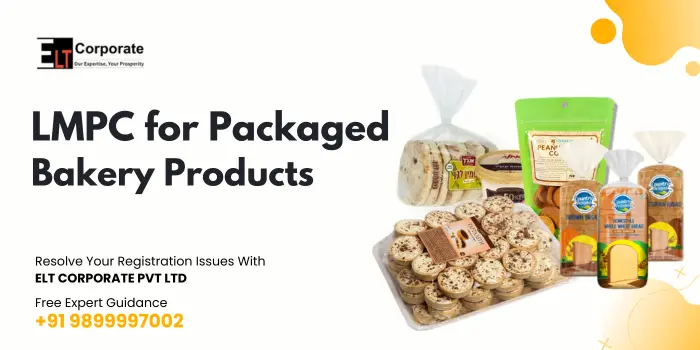
LMPC for Packaged Bakery Products (Bread, Cakes, Cookies)
When customers buy packaged bakery products like bread, cakes, and cookies, they rely on the information printed on the label. This trust comes from knowing the product follows legal and quality standards, and that’s where the LMPC certificate plays a major role. LMPC certification is mandatory for any bakery business selling pre-packaged products in India. It ensures your packaging is accurate, your labeling is compliant, and your products meet the weight and measurement standards set by law. Let’s understand everything regarding LMPC for packaged bakery products, its importance, the procedure to get LMPC registration done, and many more. Understand The LMPC Certificate The LMPC “Legal Metrology Packaged Commodities” certificate is issued under the Legal Metrology Act, 2009. All manufacturers, packers, and importers are required to deal in pre-packaged goods. For bakery businesses, this means: Why Is LMPC For Packaged Bakery Products In India Mandatory? The LMPC certificate is proof of quality, so when we purchase bread, cakes, or cookies, let’s say it’s not about taste, it’s related to trust and transparency. The LMPC certificate is a legal metrology requirement that secures both businesses and consumers. Here is why it is important: Who Needs An LMPC Certificate? Any manufacturer, packer, or importer who deals with pre-packaged goods intended for sale in India needs an LMPC certificate. This includes businesses selling packaged bakery items such as bread, cakes, or cookies. Procedure To Apply LMPC For Packaged Bakery Products If you’re a bakery owner planning to sell products in sealed packaging like cookies, bread, and cakes, you are required to comply with Legal Metrology Rules. The LMPC certification procedure can be made easier if you follow our guide to get LMPC for packaged bakery products: Documents Required For LMPC Certificate For Packaged Bakery Products To obtain LMPC for packaged bakery products, you must secure these documents for easy registration: LMPC Labeling Requirements for Bakery Products When selling packaged bakery items like bread, cakes, or cookies in India, businesses should follow the labelling standards laid out under the Legal Metrology Act, 2009, and the Packaged Commodities Rules, 2011. These rules are in place to make sure products are presented clearly, weighed accurately, and labeled with all important information. Helping protect both consumers and businesses. Cost Of LMPC Registration For Packaged Bakery Products In India The cost of LMPC registration for packaged bakery products can differ based on the location, business size, and whether you choose professional assistance. However, it includes: Important tip – If you think getting professional assistance is costly, think of it from the future perspective, as it will save you in the long run. Timeline To Obtain LMPC For Packaged Bakery Products Look below to check the timeline to get the LMPC certificate for packaged bakery products: S.No. Stages of the Procedure Estimated Duration to Obtain LMPC Certificate 1. Documents Collection & Review 1 to 2 working days 2. Application Submission 1 Working day 3. Department Scrutiny & Inspection 5 to 7 working days 4. Certificate Issuance (Post-Approval) Under 11 to 16 days Validity Of LMPC For Packaged Bakery Products The LMPC certificate does not come with a fixed nationwide validity period, however, it can be said that it is valid for approximately 5 years. It’s important to renew the LMPC certificate for packaged bakery products. To know the details of renewal, you can check out the next answer. Renewal Procedure Of LMPC Certificate For Packaged Bakery Products Here we have created a list of simple steps for you to easily get the renewal of the LMPC certificate: Penalties For Non-Compliance With LMPC For Packaged Bakery Products If a bakery sells pre-packaged products like bread, cakes, or cookies without complying with LMPC rules, then it will lead to very serious legal consequences. Which includes: However, you can easily avoid all kinds of penalties by getting yourself LMPC registration, by using authorized weighing machines, and ensuring the correct legal packaging. Why Select ELT For LMPC Certification? The correct compliance partner is important for a smooth and hassle-free LMPC certification process. ELT Corporate is one of the best-trusted companies in the field of regulatory compliance for several reasons: