How to Get Import Export License In India? [Import License Registration]
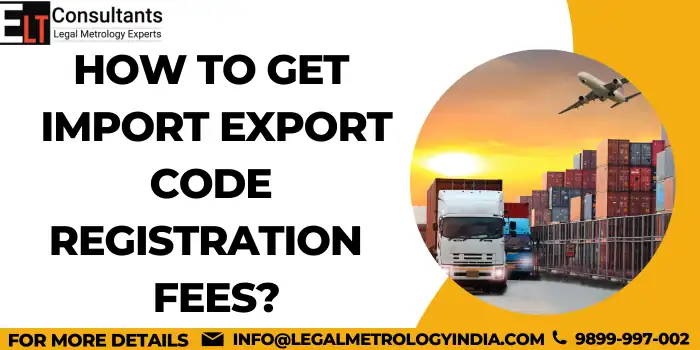
In this blog, we will guide you through the process of get Import Export License registration fees in 5 easy steps. We understand that navigating through government procedures can be a hassle which is why we have simplified the process for you. By following these simple steps, you can obtain your IEC registration fees hassle-free and get your business up and running for international trade. So, let’s dive in and explore the steps to get your Import Export Code registration fees in a stress-free manner. What Is Import Export Code? Import Export Code (IEC) registration is an essential requirement for businesses involved in international trade. It is a unique 10-digit code issued by the Directorate General of Foreign Trade (DGFT) that enables businesses to undertake import and export transactions. The process of obtaining an IEC can be daunting especially when it comes to paying the registration fees. Procedure To Get Import Export License in India To obtain the import export license in India you have to follow the basic 5 points. With the help of these points you can simply apply for the import license. The steps are as follows: Step 1: Determine Your Eligibility for IEC Registration The first step in getting your IEC registration fees is to determine your eligibility. All businesses that engage in international trade including importers and exporters, need to register for IEC. Sole proprietors, partnership firms, limited liability partnerships (LLPs), companies, and any other form of business entity can register for IEC. Step 2: Gather the Required Documents for IEC Registration The next step is to gather the required documents for IEC registration. These documents include a PAN card, GST registration, bank account details, passport-size photographs, and proof of business address. If you are a company or LLP you will also need to provide your certificate of incorporation, memorandum of association, and articles of association. Step 3: Complete the IEC Application Form Once you have all the required documents, you can complete the IEC application form online or offline. The online application process is preferred, as it is faster and more convenient. You can visit the DGFT website and fill out the application form online. Step 4: Pay Your IEC Registration Fees Online After completing the application form, you will need to pay your IEC registration fees online. The fees can be paid through net banking, credit card, or debit card. The fees for IEC registration are currently Rs. 500. Step 5: Track Your IEC Application Status Finally, you can track the status of your IEC application online. You will receive an email notification once your application is approved Once approved, you can download your IEC certificate from the DGFT website. Who is Eligible For Import-Export License? An individual or business owner who is willing to import any pre-packaged goods or weight instrument can apply for the import-export license. Do You Need To Renew The Import Export License? Yes, you can apply for the renewal of Import Export license in the month of April to June. If you forget to renew this license then your code is deactivated & you are not allowed to import goods or impose fine on yourself. Common Mistakes to Avoid During the IEC Registration Process During the IEC registration process, it is important to avoid certain common mistakes. These mistakes can cause delays or even rejection of your application. Some of the mistakes to avoid include incorrect or incomplete information, submitting the wrong documents, and not paying the registration fees on time. Tips for a Smooth and Successful IEC Registration Experience To ensure a smooth and successful IEC registration experience, it is important to follow these tips. Firstly make sure you have all the required documents before starting the application process. Secondly, double-check all the information you enter on the application form. Thirdly, pay the registration fees on time to avoid any delays. Finally, keep track of the status of your application and follow up if necessary. Conclusion – Get Import Export License In conclusion, getting your Import Export Code (IEC) registration fees can be a straightforward process if you follow the necessary steps. The first step is to ensure that you have all the required documents and information. The next step is to fill out the IEC application form and make the payment. After that, you can track the status of your application and download your IEC certificate once it is issued. It is essential to note that having an IEC is crucial for businesses involved in international trade. It enables them to import and export goods and services and expand their customer base globally. Therefore, it is essential to prioritize obtaining an IEC as it can significantly benefit your business in the long run. In summary, by following the five easy steps mentioned in this blog, you can get your IEC registration fees without any hassle. So, take the first step towards expanding your business by getting your IEC today! Frequently Asked Questions (FAQ)