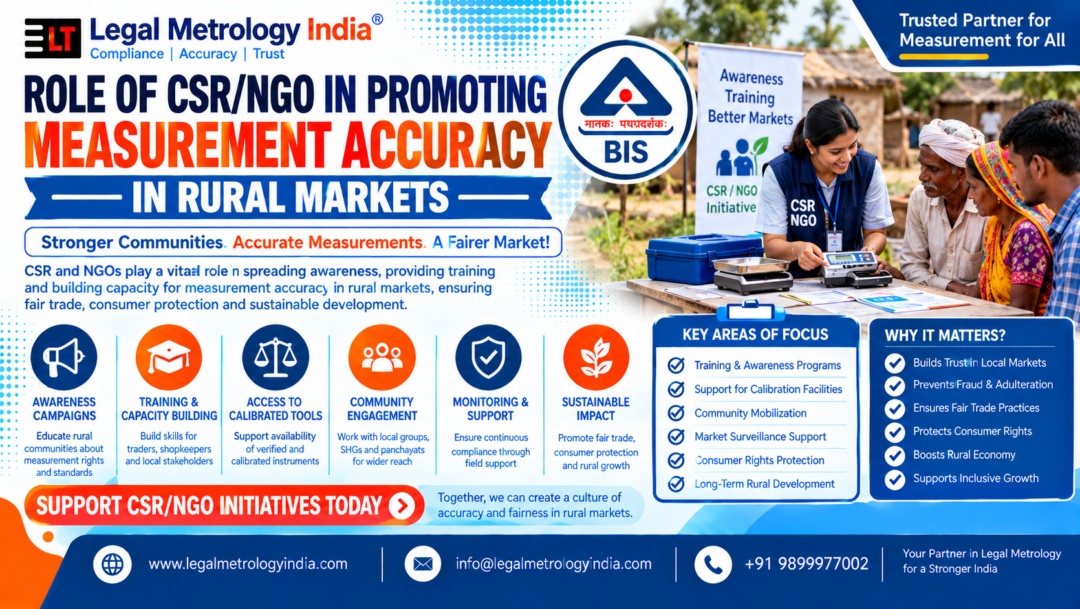
Accurate measurement is essential for fair trade, consumer protection, and trust between buyers and sellers. In rural markets, people often purchase grains, vegetables, milk, fuel, seeds, and other daily-use products from small shops and local vendors. Even a small difference in weight or quantity can affect household budgets and a seller’s reputation. This is why the CSR and NGO role in measurement accuracy deserves more attention. Through awareness campaigns, practical training, and community support, organizations can help rural buyers and sellers understand correct measurement practices.
Rural markets may face challenges such as limited awareness of weighing rules, outdated weighing instruments, poor access to verification services, and a lack of information about consumer rights. These issues do not always happen intentionally. Sometimes, sellers simply do not know how to check their equipment or where to seek help. Corporate Social Responsibility (CSR) programs and non-governmental organizations (NGOs) can help close this knowledge gap and encourage fair, transparent transactions.
Why Measurement Accuracy Matters in Rural Markets
Many rural families depend on local markets for essential goods and earn their income by selling agricultural produce, milk, handicrafts, and other products. When a weighing scale shows an incorrect quantity, either the customer or the seller may suffer a loss.
Measurement accuracy in rural markets supports fair pricing because customers receive the quantity they pay for, while sellers can charge fairly for their products. Accurate measurements also help farmers understand the quantity of produce they sell and compare offers from different buyers. In markets where margins are small, even minor differences can have a meaningful financial impact.
Correct measurement is also linked to consumer awareness. Customers should know how to read a weighing scale, check the displayed quantity, and ask questions if a measurement appears doubtful. Sellers should understand that using suitable and verified instruments helps protect their business and customers.
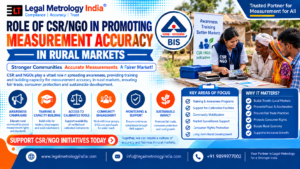
CSR and NGO Role in Measurement Accuracy can make rural trade fairer and more transparent.
Understanding the CSR and NGO Role in Measurement Accuracy
The CSR and NGO role in measurement accuracy is not limited to distributing information leaflets. These organizations can work directly with communities, market associations, schools, self-help groups, farmer groups, and local authorities to make accurate measurement a practical habit.
CSR teams can fund awareness drives, training workshops, demonstration equipment, educational materials, and community events. NGOs can help identify local needs, communicate in regional languages, bring people together, and follow up after training. When both work with relevant government departments, they can help communities understand existing measurement requirements and access appropriate support.
Through community awareness programs, organizations can explain measurement practices in simple language and encourage responsible behavior.
1. Organizing Community Awareness Campaigns
Awareness campaigns are one of the simplest ways to introduce measurement accuracy to rural communities. CSR programs and NGOs can organize meetings in village markets, panchayat halls, community centers, schools, and farmer gatherings. Short sessions in local languages can explain why correct weight matters and how inaccurate measurement can affect income and household spending.
Campaigns can demonstrate how to read a scale and raise concerns about doubtful measurements.
The CSR and NGO Role in Measurement Accuracy becomes stronger when awareness activities use real examples instead of complicated legal language. Posters, street plays, short videos, and question-and-answer sessions can make the subject easier to understand. Organizers should provide clear contact information for the relevant local authority rather than making promises they cannot guarantee.
Measurement Awareness Campaigns can help rural communities recognize the importance of fair transactions and accurate weighing.
2. Supporting Traders with Practical Training
Small shopkeepers, village vendors, milk collectors, and agricultural traders may use weighing instruments every day but may not receive regular guidance on proper handling. Training can show them how to keep instruments clean, place them correctly, avoid overloading them, read results properly, and arrange inspection or verification where required.
A simple checklist can help traders review their equipment before business hours. They can check for visible damage, unstable surfaces, unclear readings, and other signs that an instrument may need attention. Training should also explain that informal adjustments or repairs may affect accuracy and that qualified service providers should be contacted when necessary.
These efforts support business compliance management by making good practices easier to follow. Traders who understand measurement requirements are better prepared to maintain customer confidence, reduce avoidable disputes, and keep their business operations organized.
CSR and NGO Role in Measurement Accuracy can encourage traders to adopt responsible measurement practices.
3. Helping Communities Access Verification Services
Some rural traders may not know which department handles weighing and measuring instruments or how to request verification. CSR and NGO programs can help share accurate information about local procedures, official contacts, service locations, and applicable requirements.
Where permitted and coordinated with the responsible authorities, organizations can support information camps or help traders understand the process for getting instruments checked. They should not present themselves as government inspectors or issue official certificates unless legally authorized. Their role is to guide, connect, and educate.
Access to reliable guidance can make measurement accuracy in rural markets easier to maintain. It can also help traders understand that the requirements may differ depending on the type of instrument and its use. Any advice should be checked against current rules and guidance from the competent authority.
CSR and NGO Role in Measurement Accuracy can improve access to reliable compliance information.
4. Educating Consumers About Their Rights
Consumers can help encourage fair measurement when they know what to check and where to ask for assistance. NGOs can explain basic consumer rights through self-help groups, women’s groups, farmer collectives, local schools, and community meetings. Sessions can encourage customers to check the scale display, pay attention to the stated quantity, ask for clarification, and keep receipts when available.
Consumers should be encouraged to raise concerns calmly and use the proper complaint channels if a problem remains unresolved. Organizations can provide information on how to document a concern, including the date, market location, product, stated quantity, and available receipt. They should avoid encouraging public accusations without evidence.
Consumer rights awareness helps buyers make informed decisions and understand how to seek assistance when they suspect inaccurate measurement.
How Legal Metrology Supports Fair Trade
Legal metrology refers to the rules and practices that help ensure measurements used in trade are accurate and reliable. Applicable requirements may cover weighing and measuring instruments, verification, and packaged commodities, depending on the situation. Businesses should check the rules relevant to their products and activities with the competent authority.
For organizations working in rural markets, legal metrology awareness provides a useful foundation for consumer education and responsible trading. CSR teams and NGOs can help people understand why compliance matters, but they should avoid giving definitive legal advice unless qualified to do so. When a specific issue arises, traders and consumers should seek guidance from the appropriate department or qualified professional.
The legal metrology framework is more effective when people understand how it affects everyday transactions. Community education can encourage voluntary good practices, improve awareness of complaint routes, and support a market culture where quantities are clear and fair.
CSR and NGO Role in Measurement Accuracy can support wider awareness of fair measurement practices.
5. Using Digital Tools for Better Awareness
Digital resources can make educational information easier to share. NGOs and CSR teams can circulate short videos, visual guides, voice messages, and regional-language content through community groups and training sessions. These resources can explain how to read weighing scales, identify possible measurement concerns, and find official information.
Digital compliance tools can also help organizations distribute learning materials and collect feedback about training sessions. However, digital information should complement practical demonstrations and direct support, particularly in areas where internet access or digital literacy is limited.
6. Building Partnerships with Local Institutions
Long-term improvement requires cooperation between local authorities, village leaders, market associations, schools, farmer groups, and community organizations. These partnerships can help identify recurring issues, arrange awareness activities, and direct traders or consumers to appropriate support.
The CSR and NGO Role in Measurement Accuracy becomes more effective when activities are planned around real community needs. Regular follow-ups can help organizers understand whether people have adopted the practices explained during training.
Benefits of Promoting Measurement Accuracy
Promoting accurate measurement can benefit both consumers and businesses. Customers gain confidence that they are receiving the quantity they pay for, while traders can build stronger relationships with buyers. Farmers may also benefit from clearer transactions when selling produce by weight or quantity.
For CSR programs, these initiatives offer a practical way to support consumer awareness and responsible business practices. NGOs can strengthen their community impact by helping people access reliable information and understand the steps available when problems arise.
Conclusion
Accurate measurement is a basic requirement for fair and trustworthy rural trade. CSR programs and NGOs can make a meaningful contribution by educating consumers, training traders, helping communities access reliable information, and partnering with local institutions. Their work is most effective when it is practical, inclusive, and supported by follow-up.
The CSR and NGO Role in Measurement Accuracy should focus on building understanding rather than creating fear. Simple demonstrations, regional-language resources, and clear referral pathways can help people recognize the value of correct measurement in everyday purchases and sales.
When communities, businesses, CSR teams, NGOs, and relevant authorities work together, they can encourage responsible practices and reduce avoidable disputes. Consistent awareness and access to trustworthy guidance can help rural markets become fairer, more transparent, and more confident places to trade.
Frequently Asked Questions
Q1. Why is measurement accuracy important in rural markets?
It helps buyers receive the quantity they pay for and allows sellers to trade fairly, reducing losses and disputes.
Q2. How can NGOs promote accurate measurement?
NGOs can organise local-language awareness sessions, demonstrate correct weighing practices, and guide people towards official complaint channels.
Q3. What can CSR programmes contribute?
CSR programmes can fund workshops, educational materials, community outreach, and practical training for traders and consumers.
Q4. Can NGOs verify weighing instruments?
Not unless they are legally authorised to do so. They can explain the process and direct traders to the competent authority.
Q5. How can consumers report suspected inaccurate measurement?
They can record relevant details and contact the appropriate local authority or consumer complaint channel for guidance.
Q6. How does Legal Metrology help rural markets?
It provides a regulatory framework for reliable measurements in covered transactions and supports fair trade when requirements are followed.
SEO Details
- Main Keyword: CSR and NGO Role in Measurement Accuracy
- Website Name: Legal Metrology
- Slug: csr-ngo-role-measurement-accuracy-rural-markets
- Meta Title: CSR & NGO Role in Measurement Accuracy
- Meta Description: Learn how CSR programmes and NGOs promote measurement accuracy in rural markets through awareness, trader training, and consumer education.
- Secondary Keywords: Measurement Accuracy in Rural Markets, Community Awareness Programmes, Measurement Awareness Campaigns, Business Compliance Management, Consumer Rights Awareness, Legal Metrology Awareness, Digital Compliance Tools