In today’s rapidly advancing technological world, the convergence of traditional industries with the modern age is reworking the way we live and work. One place that this is developing appreciably is legal metrology, especially with the introduction of the Internet of Things (IoT) and smart size devices. Legal metrology, the branch of law that governs weights and measures for change, trade and industry, guarantees uniformity, security and transparency in measurements Now the metrology landscape is rapidly changing with the upward stroke of IoT and smart metering devices.
What is Legal Metrology?
Legal metrology includes the law of instruments used to measure weight, volume, temperature, duration, and other physical properties. It ensures that measurements are accurate, fair and standardized, resulting in preventing fraud, protecting customers, and ensuring consideration between buyers and sellers legal guidelines for legal metrology in the country u . S.S. A ., but in India it falls under the Legal Metrology Act, 2009 and is overseen through the Department of Consumer Affairs.
The Role of IoT in Legal Metrology
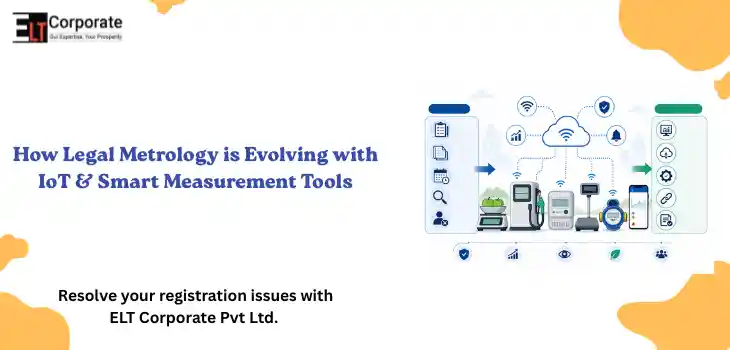
IoT (Internet of Things) refers to an interconnected community of devices that communicate and proportion facts with each different one over the internet. In the context of criminal metrology, the IoT is revolutionizing the way measurement statistics are captured, analyzed and shared. Below are a few key ways in which IoT is reworking prison metrology:
- Real-time data monitoring:
With IoT-enabled measuring devices, measurements can be monitored in real time. For example, in commercial settings, IoT sensors can immediately transmit data from weight scales or magnitude gauges to centralized structures. This fact is constantly monitored and analyzed, making it viable to immediately discover discrepancies or errors. This increases the accuracy and reliability of measures used in criminal behavior.
- Automation and Remote Measurement:
IoT-enabled devices allow remote calibration of measuring devices. Traditionally, measurement has been a manual technique, the staple of routine delays. However, with IoT devices, those gears can mechanically calibrate themselves entirely based on real-time notes, ensuring consistent accuracy. If measurements are required, it is able to be done remotely, consequently reducing downtime and maintaining the integrity of shape structures
- Data Integrity and Transparency:
Using cloud storage and blockchain technology, IoT devices can securely shop for measurement data. This statistic is tamper-proof and guarantees transparency. In the event of a dispute or audit, the government can verify the measurements by gaining access to historical statistics, consequently preventing fraudulent play and ensuring fair trade
- Predictive Maintenance:
IoT-enabled clever meters and gadgets can tune their personal health and overall performance. If a machine is nearing a break in its life cycle or is showing signs of malfunction, the machine al
Smart Measurement Tools: The New Era of Precision
Smart measurement tools are instruments that integrate advanced technology, such as sensors, data analytics, and wireless communication, to enhance the measurement process. These tools are becoming increasingly popular in legal metrology due to their precision, accuracy, and ease of use.
1. Smart Weighing Scales:
Smart weighing scales are replacing traditional mechanical or analog scales. These devices have built-in sensors that communicate dimensional statistics directly to a cloud platform or linked device. This real-time fact-tracking allows for certain compliance with the measurement standards of agencies and regulatory authorities, making them essential in industries such as retail, distribution and prescribed medicines
2. IoT-Based Gas & Liquid Meters: 1.1.
IoT-primarily based meters in industries handling gasoline and liquid metering can provide real-time monitoring of consumption. This is especially important in sectors such as electricity, construction, and healthcare, where specific measurements are required to achieve some compliance with regulations. The ability to access and test this data remotely makes it simpler for regulators to maintain compliance with crime metrology standards.
3. Smart temperature and humidity sensors:
Legal metrology is usually not about weights and measures; Temperature and humidity play an important role in areas that include food and prescribed medications. Smart temperature and humidity sensors can be used in supply chains to monitor storage conditions for perishable goods or tactile medical items. With IoT, this data can be monitored remotely, to ensure that every measurement lives within the right limits.
4. Automated quality control:
Smart dimensional tools can automatically detect any deviation from predefined calibration requirements, reducing human errors. In industries where Nice Manage is essential, like pharmaceuticals, automating the sizing process with smart appliances ensures that every product meets regulatory requirements without the need for manual checks
How Legal Metrology Will Continue to Evolve with IoT & Smart Tools
As we similarly move into the digital age, the mix of IoT, AI, and big statistical analytics will play a better more distinct role in shaping the fortunes of prison metrology. Continued improvements in sensor technology and statistics processing algorithms will allow more specific, faster, and charge-powered dimension solutions
In addition, regulatory agencies will want to conform to those changes. New standards and indicators will need to be developed to accommodate IoT-primarily based measurement devices. This includes ensuring the accuracy and reliability of smart-size devices, dealing with data protection and privacy issues, and tackling challenges posed through statistical measures generated by IoT systems
Moreover, there may be an increasing need for cybersecurity measures to protect the information shared by IoT devices. As criminal measurement systems contain sensitive and important data, the regulatory government should establish strong frameworks to ensure the security and integrity of measurement statistics
Conclusion
The integration of IoT and smart sizing gear in the field of legal metrology is setting the bar for more efficient, accurate and clear sizing systems across industries. By allowing real-time monitoring, remote measurement, predictive maintenance, and advanced fact integrity, those improvements improve overall dimensional infrastructure, sell honest trade, and ensure patron safety
As the era advances, we will assume prison metrology to end up additionally interconnected, automated, and fact pushed, with IoT and clever size tools at the forefront of this evolution. The regulator will require our bodies to embody those technological advances to ensure that criminometry continues to serve its essential purpose internationally in a more complex and virtual way.
How does IoT enhance accuracy in legal metrology?
IoT enables real-time data monitoring and automated calibration, ensuring precise and consistent measurements.
What are smart measurement tools used for in legal metrology?
Smart measurement tools, like IoT-enabled scales and sensors, provide accurate, automated measurements for fair trade and compliance.
How does IoT improve data security in legal metrology?
IoT devices store measurement data securely in cloud systems, ensuring tamper-proof records and transparency.