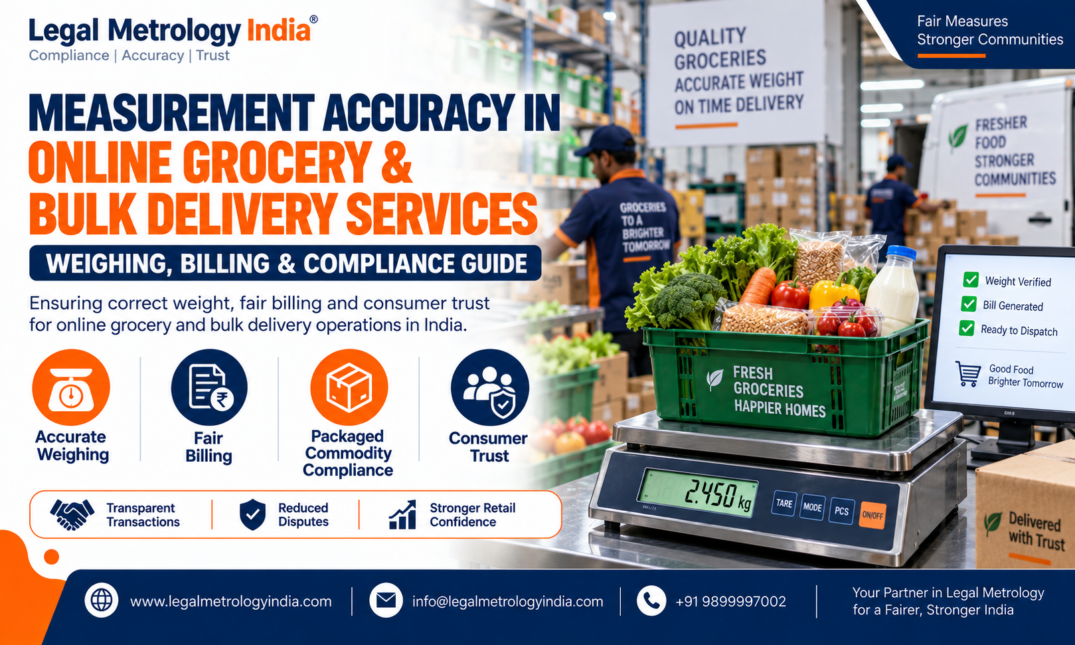

Digital weighing machines are gaining a significant share of India’s exchange, manufacturing, logistics, retail, healthcare and e-commerce environments.
From grocery stores to warehouses, from hospitals to industrial units, accurate weighing is no longer just a requirement of commercial enterprises. There is also regulatory responsibility.
In India, weighing and measuring is regulated under the Legal Metrology Act, 2009 and related policies. Any weighing device used for trade, transactions, billing, security, or commercial motives must follow criminal metrology requirements, including model acceptance, licensing, verification and stamping where relevant
As the generation progresses, virtual weighing units are anticipated to become smarter, more connected, and additionally compliance driven.
What Are Digital Weighing Instruments?
Digital weighing machines are digital devices used to measure weight as it should be.
They are commonly used for:
- Retail shop
- e-commerce warehouse
- construction machinery
- food processing industries
- Pharma and Medical Devices Corporation
- Jewelery Agency
- Logistics and Courier Agency
- hospitals and diagnostic centers
- Agricultural market
- Export Import Agency
Examples are:
- Digital Weighing Scales
- electronic balance
- The weighbridge
- Stage scale
- table-top weighing machines
- Ornament Scales
- Crane Scales
- Industrial batching scale
- medical weighing machines
These units immediately affect pricing, billing, consumer consent and regulatory compliance.
Current Regulatory Framework in India
India’s crime measurement tool ensures that weighing and measuring instruments give accurate and reliable results.
The most important prison recommendations and recommendations are:
- Legal Metrology Act,
- Legal Metrology General Rules,
- Legal Metrology Approval of Fashion Guidelines, 2011
- Legal Metrology Packaged Goods Rules,
- Methodological Metrology Government Approved Examination Center Rules,
- State Legal Metrology Enforcement Rules
Popular guidelines for legal metrology crowd round forty types of weighing and measuring instruments, including digital weighing machines, weighbridges, petrol pumps, hydrometers, clinical thermometers and sphygmomanometers
Why Digital Weighing Instruments Need Regulation
Digital weighing equipment is used in industrial practices.
Even minor errors in weighing can subsequently argue:
- Consumer loss
- overcharging or undercharging
- Incorrect billing
- Tax and liability calculation errors
- Disputes between consumers and suppliers
- Consequences of compliance
- Loss of credibility in the business organization
For example, if the virtual scale of the retail funnel indicates 980 grams rather than 1 kg, the consumer is immediately impressed.
Similarly, if a professional weighbridge gives an inaccurate reading, it can affect logistics pricing, raw material inventories, and commercial invoicing.
This is why it is miles important to conform to crime measurement technological knowledge.
Key Compliance Requirements for Digital Weighing Instruments
Businesses dealing with digital weighing instruments must understand the major compliance points.
1. Model Approval
Before manufacturing or importing a weighing instrument in India, model approval may be required.
Model approval ensures that the instrument design meets prescribed standards.
This is especially important for:
- Manufacturers
- Importers
- Brand owners
- Traders dealing in weighing instruments
The government’s Legal Metrology portal also lists applications for model approval under Section 22 of the Legal Metrology Act, 2009.
2. Importer Registration
If a company imports digital weighing instruments into India, importer registration is required under Legal Metrology.
Section 19 of the Legal Metrology Act deals with registration for importers of weights and measures.
Importers must ensure that imported digital weighing machines comply with Indian legal metrology standards.
3. Manufacturer, Dealer, and Repairer License
Businesses involved in manufacturing, selling, or repairing weighing instruments may require a license from the State Legal Metrology Department.
This applies to:
- Manufacturers
- Dealers
- Repairers
- Service providers
- Distributors
Without the required license, a business may face legal issues.
4. Verification and Stamping
Every weighing instrument used for commercial transactions must be verified before use.
Section 24 of the Legal Metrology Act requires verification and stamping of weights and measures before they are put into commercial use.
Verification confirms that the instrument is accurate and fit for use.
5. Periodic Re-verification
Digital weighing instruments are not verified only once.
They need periodic re-verification as per applicable state rules and instrument type.
This helps ensure continued accuracy.
Businesses should maintain:
- Verification certificates
- Stamping records
- Repair records
- Calibration records
- Purchase invoices
- Model approval documents
- License copies
How Technology Is Changing Digital Weighing Instruments
The future of digital weighing machines will not be limited to convenient weight display.
New Age units are smarter.
Future digital weighing structures may also consist of the following:
- IoT-based connectivity
- cloud fact storage
- QR-primarily based verification details
- Real-time weight recording
- Remote tracking
- Introduction to molestation
- Automatic measurement alert
- Digital audit trails
- Integration with ERP and billing software programs
- A-based error detection
This will help companies maintain better transparency and compliance.
Role of E-Commerce and Online Trade
E-commerce has increased the importance of accurate weighing.
Online sellers and logistics companies depend heavily on digital weighing instruments for:
- Product weight calculation
- Shipping cost calculation
- Inventory management
- Packaging compliance
- Customer billing
- Return management
Incorrect weighing can create disputes between:
- Seller and marketplace
- Seller and logistics company
- Marketplace and consumer
- Importer and customs authority
As e-commerce grows, digital weighing instruments will become more important in regulatory compliance.
Digital Weighing Instruments in Manufacturing
Manufacturing firms use virtual weighing equipment for sizing, batching, packaging and shipping of uncooked garments.
Together with food, pharmaceuticals, chemical compounds, cosmetics, medical devices, agriculture and engineering, industries rely on the right size.
In the future, manufacturers will also be able to choose from weighing systems that could be:
- Automatic
- Associated with the production software program
- Able to generate digital logs
- Connected to first class management systems
- traceable for audit work
This reduces manual errors and improves regulatory preparedness.
Digital Weighing Instruments in Healthcare
Healthcare also depends on accurate weighing.
Digital weighing machines are used in:
- Hospitals
- Clinics
- Diagnostic centres
- Pharmacies
- Blood banks
- Medical device facilities
Accurate measurement is important for patient safety, dosage calculation, diagnostics, and medical records.
The legal metrology framework also covers certain clinical and medical measuring instruments, including weighing machines used in healthcare settings.
Future Regulatory Trends in India
India’s legal metrology system is moving towards modernization.
The future may include:
- More online applications
- Digital verification records
- Integration with national portals
- Increased use of Government Approved Test Centres
- Better traceability of instruments
- Stronger compliance checks in e-commerce
- More focus on consumer protection
- Faster approval and verification systems
- Technology-based inspection and audit processes
The official Legal Metrology portal already provides online access for importer registration, model approval, packaged commodity registration, and other regulatory services.
Benefits of Smart Digital Weighing Instruments
Smart weighing instruments can benefit both businesses and regulators.
For Businesses
- Better accuracy
- Reduced billing disputes
- Improved compliance
- Easy record keeping
- Better inventory control
- Faster audits
- Reduced manual errors
- Improved customer trust
For Consumers
- Fair pricing
- Accurate quantity
- Transparency in transactions
- Better protection against fraud
For Regulators
- Easier inspection
- Better traceability
- Reduced manipulation
- Stronger enforcement
- Digital compliance monitoring
Compliance Challenges for Businesses
Many businesses still face difficulties in legal metrology compliance.
Common challenges include:
- Lack of awareness about model approval
- Confusion between calibration and legal verification
- Delay in stamping and verification
- Missing importer registration
- Incorrect documentation
- Use of unverified instruments
- Sale of instruments without proper license
- Poor record maintenance
- Non-compliance by online sellers
These issues can lead to penalties, seizure of instruments, business disruption, and loss of trust.
Difference Between Calibration and Legal Metrology Verification
Many organizations confuse measurement with criminometrical verification.
Both are important, yet they are no longer the same.
Measurement
Measurements test the instrument’s accuracy.
It is generally terminated for micromanagement and internal procedures requirements.
Legal Metrology Verification
Legal verification is carried out by the Department of Legal Metrology or by authorized centres.
It is required when weighing equipment is used for commercial transactions.
Prison metrology verification is mandatory for exchange and billing.Seventy-nine
What Businesses Should Do
Businesses using or dealing with digital weighing instruments should take compliance seriously.
They should:
- Check whether model approval is required
- Obtain importer registration, if importing
- Get manufacturer, dealer, or repairer license, if applicable
- Ensure verification and stamping before use
- Maintain proper records
- Renew licenses on time
- Avoid use of unverified instruments
- Train staff on legal metrology compliance
- Conduct periodic compliance audits
- Use only approved and compliant weighing instruments
Opportunities for Manufacturers and Importers
The demand for digital weighing instruments in India is expected to grow.
Growth will come from:
- E-commerce
- Retail modernization
- Logistics
- Manufacturing
- Food processing
- Healthcare
- Smart warehouses
- Export-oriented industries
- Government digitalization
Manufacturers and importers who focus on compliance-ready products will have a strong advantage.
Future-ready products should include:
- Accurate sensors
- Tamper-proof design
- Easy verification features
- Digital connectivity
- Strong data security
- Compliance-friendly documentation
- User-friendly display and software
The Road Ahead
The future of digital weighing instruments in India will be shaped by three major factors:
- Technology
- Regulatory compliance
- Consumer protection
As India’s economy becomes more digital, transparent, and quality-driven, weighing instruments will also become more advanced.
Businesses will no longer look at weighing machines as simple hardware.
They will treat them as compliance tools, quality tools, and trust-building tools.
Companies that adopt legally compliant, accurate, and smart weighing systems will be better prepared for the future.
Conclusion
Digital weighing units form an important part of India’s contemporary regulatory business environment.
Compliance with legal metrology is not mandatory. It is necessary for fair change, purchaser safety, and enterprise credibility.
With the upward introduction of smarter generation, e-commerce, automation and digital compliance infrastructures, the future of digital weighing machines in India looks quite promising.
Now traders don’t see inspections or results.
They must actively ensure that their weighing machines are authorized, verified, sealed and properly maintained.
A conforming weighing machine is not just a legal requirement.
It is a mark of precision, transparency and consideration.