Running a business involves multiple legal, regulatory and compliance responsibilities. Sometimes, due to delay, documentation gaps, incorrect filing, non-compliance, inspection observations or misunderstanding of legal requirements, businesses may receive notices, penalties, show-cause notices or case proceedings from government departments.
Penalty handling and case resolution help businesses respond to such issues in a structured, legal and professional manner. The objective is not only to reduce or resolve the penalty but also to protect the business from future compliance risks.
What is Penalty Handling?
Penalty handling refers to the process of reviewing, responding to and resolving penalties imposed by regulatory authorities. These penalties may arise due to non-compliance, late filing, incorrect declarations, missing records, licensing issues, labeling errors, documentation mistakes or violation of applicable laws.
A proper penalty handling approach includes:
- Understanding the reason for penalty
- Reviewing the legal notice or order
- Collecting supporting documents
- Preparing a suitable reply
- Representing the case before the authority
- Requesting waiver, reduction or closure, wherever applicable
- Ensuring future compliance
What is Case Resolution?
Case resolution means solving a regulatory or legal compliance matter through proper documentation, communication and representation before the concerned authority.
It may involve replying to notices, attending hearings, submitting clarifications, filing rectifications, applying for amendments, making compliance corrections or negotiating a practical solution as per applicable rules.
Common Reasons for Penalties
Businesses may face penalties due to several reasons, such as:
- Delay in filing returns or reports
- Operating without valid license or registration
- Expired license or certificate
- Incorrect product labeling or packaging
- Non-submission of mandatory documents
- Mismatch in business records
- Violation of regulatory conditions
- Failure to respond to notices on time
- Incorrect import/export declarations
- Non-compliance found during inspection
Types of Cases That Require Resolution
Penalty and compliance cases may arise in different regulatory areas, including:
- Legal Metrology matters
- FSSAI food licensing issues
- CDSCO medical device or cosmetic compliance
- BIS certification related matters
- EPR compliance cases
- Import and export regulatory issues
- GST and tax-related notices
- Company law compliance matters
- Consumer protection complaints
- Product labeling and packaging violations
Why Timely Response is Important
Ignoring a notice or penalty can create serious problems for a business. In many cases, delay may lead to higher penalties, suspension of license, cancellation of registration, product seizure, legal proceedings or restrictions on business operations.
A timely and well-drafted response helps in:
- Avoiding unnecessary escalation
- Presenting facts clearly
- Reducing penalty risk
- Protecting business reputation
- Maintaining regulatory compliance
- Closing the matter faster
Steps Involved in Penalty Handling / Case Resolution
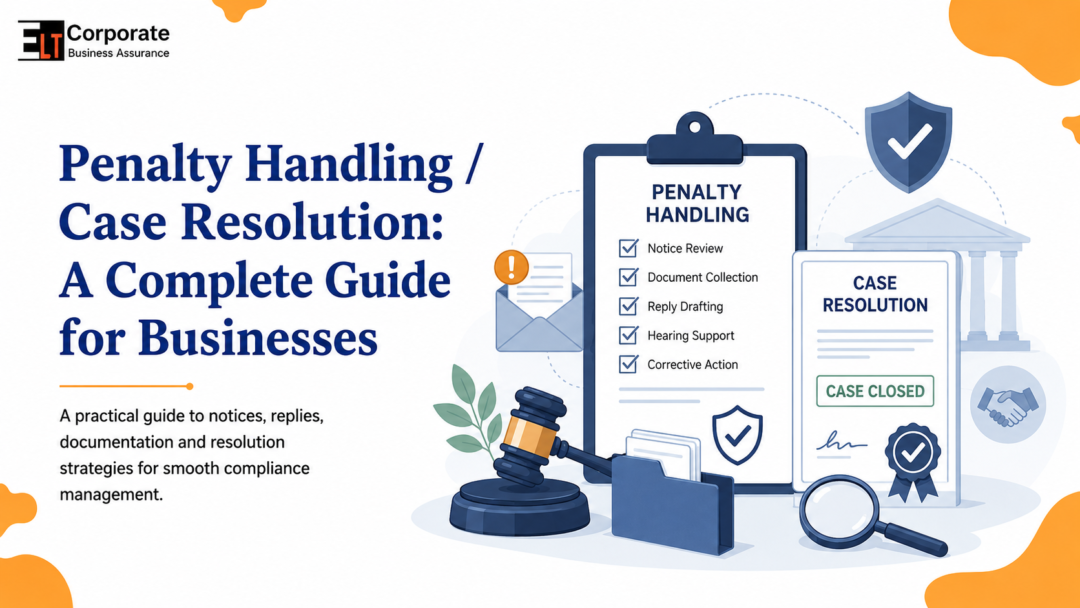
1. Notice Review
The first step is to carefully review the notice, penalty order or communication received from the authority. It is important to identify the exact issue, applicable law, deadline for reply and documents required.
2. Compliance Gap Analysis
After reviewing the notice, the next step is to check where the compliance gap occurred. This may include checking licenses, invoices, product labels, returns, declarations, certificates, records and previous submissions.
3. Document Collection
Strong documentation is the backbone of any case resolution. Supporting documents may include registration certificates, invoices, test reports, licenses, declarations, correspondence, compliance records and proof of corrective action.
4. Drafting of Reply
A professional reply should clearly explain the facts of the case, reasons for the issue, corrective actions taken and legal grounds for waiver or reduction of penalty, wherever applicable.
5. Submission to Authority
The reply and documents must be submitted within the prescribed timeline. Proper acknowledgement should be maintained for future reference.
6. Hearing or Representation
In some cases, the authority may call the business for a hearing. During the hearing, the business must present facts, explain compliance actions and request suitable relief.
7. Corrective and Preventive Action
Resolving the case is not enough. The business should also take corrective and preventive actions to avoid similar issues in the future.
How Professional Support Helps
Penalty handling requires practical knowledge of law, documentation and department procedures. Professional support can help businesses manage the case more effectively.
Experts can assist in:
- Reviewing notices and penalty orders
- Identifying compliance gaps
- Preparing legal and technical replies
- Organizing supporting documents
- Communicating with authorities
- Representing during hearings
- Filing amendments or rectifications
- Reducing future compliance risks
Benefits of Proper Case Resolution
A structured case resolution approach offers several benefits:
- Faster closure of pending matters
- Reduced penalty exposure
- Better communication with authorities
- Improved compliance record
- Protection from repeated violations
- Smooth business operations
- Stronger regulatory confidence
Preventive Compliance is the Best Solution
The best way to avoid penalties is to maintain proper compliance from the beginning. Businesses should regularly review their licenses, renewals, filings, labels, product approvals, records and statutory obligations.
A preventive compliance system helps in identifying issues before they become penalties or legal cases.
Conclusion
Penalty handling and case resolution are important for every business dealing with regulatory authorities. A notice or penalty should not be ignored or handled casually. With proper review, documentation, professional reply and timely action, many compliance matters can be resolved effectively.
Businesses should focus not only on closing existing cases but also on building a strong compliance system to avoid future penalties and legal complications.